
You have been given a project. But not one of the people who will deliver the work reports to you. They have their own managers, competing priorities, and their reasons for deciding whether your project gets their full attention this week.
This is standard across pharma, biotech, and medtech organisations. Cross-functional project teams are how complex drug development programmes get managed, cutting across research, clinical development, regulatory affairs, and commercial. And yet the skills needed to lead in this structure are rarely taught. Most scientists step into their first project leadership role expecting that a clear plan and a new title will carry them. They don’t.
The Problem
The instinct, when you take on a project with no direct reports, is to compensate by going deeper into the technical work. If you cannot tell people what to do, at least you can control the science. You review the data, check the analysis, and verify the results. While it feels like diligence, it is actually a problem.
When you spend your time doing work your specialists are responsible for, you are not leading. You are auditing. The people assigned to your team can see the difference, and it creates a specific kind of tension: they start asking when you are going to make a decision while you are still buried in the data, waiting to feel certain before you commit.
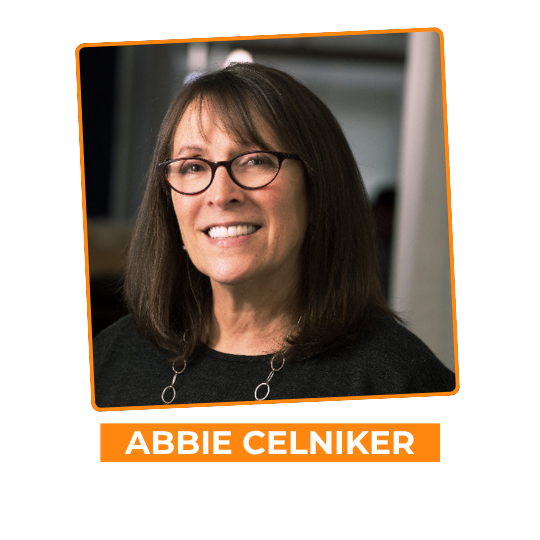
I recently spoke with Abbie Celniker, Partner at Third Rock Ventures, on the Active Ingredients podcast. Abbie has spent more than four decades in life sciences, from early scientific roles at Genentech through to chief executive officer (CEO) positions at Taliesin and 11 Biotherapeutics. The first time she was asked to lead a project, she had no direct authority over anyone working on it. “…all of a sudden, you don’t have any real line oversight of the people who are doing the work for you. You have to lead by influence, and you need to get things done.”
For most scientists, that gap is the one nobody warned them about. The scientific method gives you control, but project leadership gives you accountability without it, and closing that gap requires a different skill set entirely.
The Solution
Step 1: Know the Direction Before You Try to Bring Anyone With You
Influence without credibility is just noise. Before you can get a cross-functional team on board, you need a clear picture of what success looks like and why the work matters. In drug development, that usually means being able to explain the patient need, the scientific rationale, and the specific milestones the team is working toward.
Abbie’s early project work at Genentech involved developing training programmes to help the sales force explain complex antibody data in a competitive market. She became the person teams called when problems came up in the field, building credibility not through authority but through command of the problem. “…it was really by being a scientific program lead that I was able to sort of get the sense of… I like this, this is interesting. This is productive.”
People rarely follow a plan just because it exists. They follow someone who clearly understands the plan and can explain why it matters. Establishing that clarity is the first act of influence, and it has to happen before you ask anyone for their time.
Step 2: Earn Buy-In Rather Than Expecting It
Once you have a direction, the work is understanding why each person on your team cares about the outcome and how their contribution connects to it. This is not about selling the project. It is about making the work feel worth their full commitment.
Abbie is direct about what this shift requires. “You get a lot more done,” she told me, “when you have a bunch of people doing things than when you’re sitting there trying to do it all yourself.” Your role is no longer to produce. It is to create the conditions in which others can produce better than you ever could alone.
RELATED: Learn From Leaders Who’ve Solved This
Struggling with transformation, team building or leading through change? Active Ingredients features life science executives sharing the exact frameworks they used to navigate these challenges. Real strategies from leaders who’ve made it work.
She also describes her approach to working with others as a personal operating principle. “I just have never had any trouble thinking about things as a team sport,” she said. For leaders who grew up in environments where individual technical output was the measure of success, that shift in identity is often the hardest part of the transition.
Step 3: Give Specialists Their Runway and Stay Out of It
The final step is the one that takes the longest to master: letting people with domain expertise do their jobs. For scientists, this is not abstract. The pull to stay close to the data is genuine and strong.
Abbie is blunt about it. “…That’s a joy for a scientist. That is our candy, if you will. It’s like sitting down and plotting your data… but that’s not your job anymore. And if you’re doing that, then you’re not doing your job. And if you’re doing that, then you’re not letting somebody else do their job.”
The people on your team were selected for their expertise. “The people who you’ve hired to… really take on that technical responsibility or scientific responsibility, you have to give them that runway.”
This is not the same as stepping back entirely. Your role is to oversee the collection of outputs and make sure they integrate toward the shared goal. Staying too close to one area comes at a direct cost. “…if you’re deep, deep, deep into one place, you’re not going to be effectively leading across the entire scope of the things that you’re responsible for.” The wider view is the whole point of the role. Surrendering it to feel technically certain is a trade-off that compounds with every decision you delay.
She is also clear that the shift does not happen by itself. “…It is very intentional. And I will say there are leaders who have not learned that yet.”
The Evidence
When Abbie took on her first CEO role at a company working in the scientifically complex area of complement modulation, she brought together specialists from very different disciplines, covering biology, technology, and drug development. The expertise in the room was formidable. “…We were able to bring a group of people together who almost never agreed on anything… but that was actually the magic is that everybody had such expertise and such commitment into what they’re doing, that it was my job then to make sure that they understood that they were actually agreeing with each other…”
What followed was a team that learned to combine deep individual ownership with genuine collective responsibility, and the results reflected it. “…It wound up with this real team dynamic that, for me, was the best of both worlds: unbelievably amazing technical competence, but then the ability to understand and respect each other’s contributions…”
That outcome does not require a formal reporting line. It comes from credibility, consistent buy-in, and the willingness to give specialists the space to lead in their own areas. Abbie has applied the same approach to every leadership role she has held, and it is now a quality she actively seeks when evaluating leadership teams at the biotech companies Third Rock Ventures creates and backs.
Your Next Move
If you are managing a programme where you are accountable for results but do not have direct authority over the team producing them, the following questions are worth working through now.
- Can every person on your team explain what the project is trying to achieve and why it matters clinically or commercially? If not, your first priority is closing that gap before you ask for full commitment.
- Are you regularly checking or redoing technical work that your specialists are responsible for? If so, identify the specific decision you are trying to make, and ask yourself honestly whether that decision is yours to make.
- When did you last ask a team member what they need from you to do their best work? The answer will show you whether you are leading the project or just monitoring its progress.
The shift from doing the work to leading the people doing it is the defining transition for life sciences professionals who want to grow into senior roles. The scientific capabilities that built your reputation are not what will carry you through it.
Abbie Celniker’s full conversation on the Active Ingredients podcast covers additional topics including the CEO-as-emcee principle, what an integrated leadership team looks like at different stages of a biotech company’s development, and how to navigate the tension between investor and operator perspectives at board level. Tune into the full episode.
At Fraser Dove International, we work with life sciences organisations to identify leaders who can operate effectively across complex, cross-functional environments, from project leadership through to C-suite. If you are building a team that needs those capabilities, we would be glad to talk.
Thomas Dove, CEO
Thomas Dove is CEO and Co-Founder of Fraser Dove International. As host of the Active Ingredients podcast, Thomas interviews senior executives and industry pioneers to uncover the insights that drive successful life science organisations.
Through his work in executive search and the hosting the Active Ingredients podcast, Thomas has developed deep expertise in identifying the leadership qualities that distinguish exceptional life science executives. He regularly writes about talent acquisition strategies, leadership development, and the evolving challenges facing C-suite professionals in the rapidly changing life sciences.
Thomas is passionate about helping life science professionals navigate their career journeys and supporting organisations in building leadership teams that can drive innovation and growth. His insights stem from years of working closely with senior leaders across the pharmaceutical, biotechnology, and Medical Device industries.
Outside the office, he champions family values, positive energy, and his beloved Chelsea FC.

* This article is based on an interview from the Active Ingredients podcast. Hosted by Thomas Dove, the Active Ingredients Podcast dissects the very essence of exceptional leadership in the life sciences. Subscribe to the Active Ingredients podcast on Spotify, Apple Podcasts, Amazon Music and YouTube.
Loved this article?
Share it with your friends, family or your peers!
RELATED

Why Great Ops Leaders Fail The Innovator-to-CDMO Transition
Read post
Why You Can’t Hold a Team Accountable Without Empowering It
Read post
How to Lead as a Private Equity-Backed CEO When You Come From Big Pharma
Read post
How To Fix Career Development Conversations
Read post
Why Your CDMO Sales Model Is Losing You Customer Trust
Read post