




You are an expert in your field and a master in your craft. You know how things work, how to fix problems, and how to get results. Building your leadership team should, in theory, be the natural next step.
But in executive hiring, the philosophy most leaders follow tends to work against them. Even experienced, effective leaders can find that the candidates most likely to stretch their thinking are, in the moment, the ones who feel like a harder hire. They push back, surface assumptions, and make the limits of any leader’s expertise visible.
The pull towards a safer candidate, someone who will execute well and defer when it counts, is understandable. It’s also one of the most common reasons life sciences executives plateau at the very moment they should be scaling.
The Problem
There’s a failure mode in executive leadership that rarely gets named directly. Operational leaders are particularly vulnerable to it.
Their careers have been built on knowing the details. Running a manufacturing site or leading an operations function rewards deep expertise, close control, and decisive ownership of problems. Those are genuine strengths. But when the same leader steps into an executive or CEO role and applies the same instincts to team building, the results tend to be predictable.
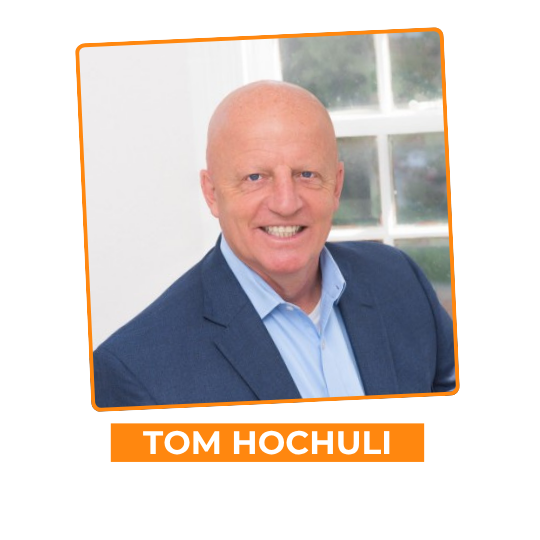
I recently sat down with Tom Hochuli on the Active Ingredients podcast to explore this. Tom is a military-trained operator whose career spanned Army platoon leadership, manufacturing and operations roles at Johnson & Johnson and Lonza, and culminated in Chief Executive Officer (CEO) and Board Member at Millrock Technology. He has built leadership teams across some of the most complex environments in life sciences.
“If you jump from [site] operations, you’re running everything. You get into an executive role and you try to run everything, you’re going to fail,” he told me.
The habits that built the career become the habits that cap it. Leaders who hire people they can manage end up doing exactly that, managing, rather than leading a business that can grow beyond them.
“If you’re making all the decisions, you’re not trusting people, you’re not delegating. You can’t take that next step.”
His answer is a hiring philosophy that most executives understand in theory but find difficult to put into practice.
“It’s really surrounding yourself with [people] that you trust, that you respect, and in some cases that you fear will take your job. To me, that is the cornerstone of my hiring philosophy. I want to hire people to steer me, because then I know that I’ve done the right thing.”
The Solution
Step 1: Use Fear of Replacement as a Hiring Filter
Tom’s core principle sounds counterintuitive the first time you hear it. Hire the person who might eventually take your job.
“…this person is so good at their job. You know, eventually they may sit in my [seat], so you have to be self-confident, and you have to take that risk. Some people aren’t willing to take that risk.”
This is where the connection to self-confidence becomes concrete. Tom identifies self-confidence as one of the foundations of his entire leadership philosophy, the quality that makes trust, vulnerability, and honest communication possible. Without it, a leader can’t act on a hiring principle like this. The threat of being overshadowed can feel too real, and the safer, more controllable hire often wins out.
“You have to be confident in yourself to trust. You have to be confident in yourself to be vulnerable. And that’s how you build trust.”
Regulatory, manufacturing, and commercial decisions hinge on the quality of the senior team. Consequently, a leadership team hired for comfort can represent a liability. Tom’s view is that the discomfort of hiring someone that strong is precisely the signal you should be looking for.
RELATED: Learn From Leaders Who’ve Solved This
Struggling with transformation, team building or leading through change? Active Ingredients features life science executives sharing the exact frameworks they used to navigate these challenges. Real strategies from leaders who’ve made it work.
Step 2: Hire to Cover Your Blind Spots, Not to Confirm Your Strengths
The second part of Tom’s approach is about self-awareness. Knowing what you don’t know, and making sure the people around you cover it.
When Tom was approached for his first CEO role, he knew operations, quality, HR, and finance well. Commercial strategy was less familiar territory. The solution was to build a leadership team that covered it.
“Surround yourself with brilliant people, and find the people that [match] your culture as well… they can be an A player, but if they don’t match the culture, they’re not going to help you.”
Cultural alignment, Tom is clear, is a non-negotiable. Someone who undermines trust or disrespects colleagues creates damage that no technical capability can offset. He has made hard decisions to move people on who met every professional criterion but corroded the culture around them.
“…if you disrespect the individuals on the team, I don’t think you play a part in this team.”
The hiring brief, then, is deliberately narrow: brilliant in their domain, strong enough to challenge, and genuinely aligned with how the team works and what it’s working towards.
Step 3: Once You’ve Hired Well, Get Out of the Way
The third step is perhaps the hardest for operational leaders to internalise. Once the team is in place, your job shifts from making decisions to removing the obstacles that prevent your team from making decisions themselves.
“As an executive leader, move obstacles for people. Don’t do their job. Help them by removing the obstacles so they can flourish and they can do their job, and then just sit back and be amazed at how good they are.”
For leaders who have built their careers by solving problems directly, this is a significant identity shift. Being the person with the answer is a genuine strength at the site level, but at the executive level, the same instinct becomes a bottleneck. The leader who stays deep in the details crowds out the people beneath them, limits their growth, and ends up running a function rather than a business.
Tom’s philosophy here goes back to a principle he first learned in the military. “Everyone has a purpose. Everyone has a skill. And how best can you cultivate that? How best can you bring out the most in a person?” The same question that shaped how he led a platoon shapes how he builds executive teams today.
This step only works when real trust has been built first, through consistency, honesty, and the willingness to be open about what you don’t know. Without that foundation, stepping back reads to your team not as empowerment but as disengagement.
The Evidence
The clearest example of his executive hiring philosophy in action came during his time running a 550-person manufacturing site at Lonza. Sales and business development teams would bring prospective customers to the facility, and Tom noticed a consistent factor driving outcomes.
“What sold our business and our product was not the product. It was the people. And it was our senior leadership team.”
Tom had invested time in finding the right individuals, cultivating trust across the group, and ensuring the people around him covered the areas where he was less strong. The result was the leadership team became the competitive advantage, the thing that closed deals and built client confidence in a way no specification document could replicate.
When the CEO opportunity came, it was the experience of having built that team that gave him the confidence to raise his hand. The commercial gap he’d been concerned about had already been covered by the people he’d put in place around him.
Your Next Move: Building Your Own Executive Hiring Philosophy
If you’re stepping into or already operating in an executive role, the quality of your leadership team is the primary variable in whether you scale or stall. Before your next hire, ask yourself:
- Would this person one day be capable of sitting in my seat? If the thought makes you uncomfortable, that discomfort is worth examining honestly.
- Am I hiring to cover my blind spots, or to reinforce areas where I already feel confident?
- When my team brings me a problem, is my instinct to solve it myself or to remove whatever is stopping them from solving it?
- Could every member of my leadership team articulate why they’re here and what we’re collectively working towards? If not, cultural alignment may not be as solid as it appears.
The answers will shed light on your executive hiring philosophy and whether you’re building a team that stretches you, or one that keeps you comfortable.
Tom Hochuli’s full conversation on the Active Ingredients podcast covers situational leadership, team DNA, and his transition from military service to life sciences CEO.
Fraser Dove International partners with life sciences organisations to identify executive leaders who build high-performance teams and scale with confidence. If you’re looking for talent capable of driving your next phase of growth, get in touch.
Thomas Dove, CEO
Thomas Dove is CEO and Co-Founder of Fraser Dove International. As host of the Active Ingredients podcast, Thomas interviews senior executives and industry pioneers to uncover the insights that drive successful life science organisations.
Through his work in executive search and the hosting the Active Ingredients podcast, Thomas has developed deep expertise in identifying the leadership qualities that distinguish exceptional life science executives. He regularly writes about talent acquisition strategies, leadership development, and the evolving challenges facing C-suite professionals in the rapidly changing life sciences.
Thomas is passionate about helping life science professionals navigate their career journeys and supporting organisations in building leadership teams that can drive innovation and growth. His insights stem from years of working closely with senior leaders across the pharmaceutical, biotechnology, and Medical Device industries.
Outside the office, he champions family values, positive energy, and his beloved Chelsea FC.

* This article is based on an interview from the Active Ingredients podcast. Hosted by Thomas Dove, the Active Ingredients Podcast dissects the very essence of exceptional leadership in the life sciences. Subscribe to the Active Ingredients podcast on Spotify, Apple Podcasts, Amazon Music and YouTube.
Loved this article?
Share it with your friends, family or your peers!
RELATED

How to Lead as a Private Equity-Backed CEO When You Come From Big Pharma
Read post
How To Fix Career Development Conversations
Read post
Why Your CDMO Sales Model Is Losing You Customer Trust
Read post
The Executive Hiring Philosophy Behind Life Sciences’ Best CEOs
Read post
How to Turn Around a Declining Pharma Product When Your Team Has Stopped Believing
Read post