
You inherited a product that used to perform. Now the forecasts keep getting revised down, resources are quietly moving to newer assets, and the team is starting to lose faith. You know something has to change. But every option feels like managing the decline rather than reversing it. The real problem may not be the product at all. It may be how you approach the turnaround.
The Problem
When a pharmaceutical product starts losing ground, the organisational response is almost automatic. Resources flow toward newer assets, and headcount gets trimmed. The commercial team behind the product shrinks, and with it, any remaining expectations for what the asset could still achieve. The product gets mentally shelved long before it is commercially finished.
Life science leaders focused on a pharma product turnaround often miss what is driving that decline.
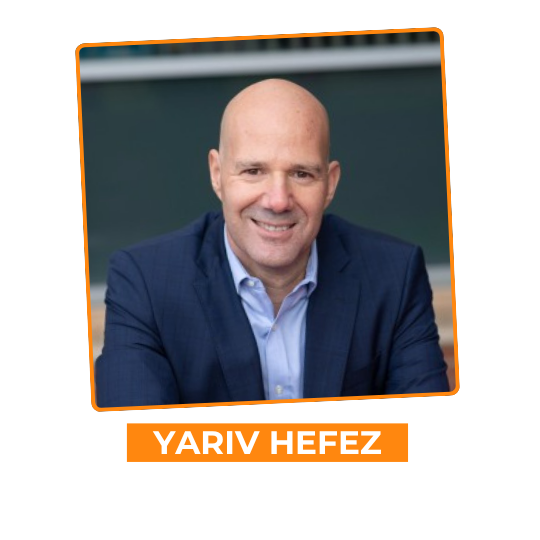
Yariv Hefez has seen this pattern play out across more than 60 markets. As Senior Vice President and Head of Global Business Franchise Oncology at Merck Group, he has built businesses from scratch, led turnarounds, and scaled a “2 billion global oncology franchise.”
Yariz spoke with me on the Active Ingredients podcast about a turnaround he led directly: a product with roughly “500–600 million in annual sales” that he grew to blockbuster status over four to five years.
His view on why most turnarounds fail is direct. “…when you have a mature product, and you have to turn it around, and it’s not doing that great, the organisation has already lost belief many times in the product. There is this mindset and preconceived idea about the product.”
That loss of belief does not stay with the commercial team. It spreads through every function that touches the asset. “…when you are in a turnaround, it’s not only about fixing the business, but it’s also about shaping and changing the way people think about the business.”
That internal belief problem, he argues, is a harder challenge to address than anything the product faces externally. And it starts with the approach the leader brings into the room on day one.
We’ve seen it first hand in our work placing commercial leaders across oncology and rare disease: a new leader is brought in to turn around a failing pharma product, only to find the team is more focussed on replacing then revamping the existing offering.
The Solution: The Pharma Product Turnaround Playbook
Step 1: Treat the Asset Like a New Launch
The most important shift is in how you frame the turnaround.
Most commercial leaders walk into a struggling product situation with what might be called a declining product mentality: cautious, conservative, focused on protecting what is left. That signal travels fast inside an organisation. When the team sees their leader managing down, they start doing the same.
Yariv’s starting point is the opposite. “You have to give it the same energy, drive, and focus that you give a launch,” he said. “…if you approach it like a declining product, you’ve already lost. But if you come with the energy of a new launch, you have a very good chance of success.”
Launch energy is not a mood. It is a set of practical decisions: treating the asset as if it deserves serious resourcing, serious strategic thinking, and serious talent. It means resisting the institutional pull in large organisations that redirects people and budget away from anything not labelled as a growth priority.
Yariv draws a clear distinction between two types of leaders. “…a scaling leader needs to challenge the status quo, needs to come with a fresh set of eyes, needs to build a team that is willing to debate, willing to challenge, willing to push back.” A leader in maintenance mode, by contrast, focuses on optimising what already exists. A turnaround demands the first type, even when the asset feels like it belongs to the second.
RELATED: Learn From Leaders Who’ve Solved This
Struggling with transformation, team building or leading through change? Active Ingredients features life science executives sharing the exact frameworks they used to navigate these challenges. Real strategies from leaders who’ve made it work.
Step 2: Find the Differentiation You Have Stopped Using
Once you have reset the energy around the product, the work becomes analytical. Before you can rebuild belief, you need something concrete to believe in.
“You have to come to look at things with a different lens,” he told me. “You have to identify the potential growth driver points.” When he did, the answer became clear. “…I realised the product was highly differentiated, but we did not focus on the right differentiation.”
Products that have been on the market for several years tend to gain commercial inertia. The messages that worked at launch get recycled year after year, even when the competitive situation has moved on.
Yariv’s view is that the first diagnostic question is not: what is wrong with this product? It is: what does this product do better than anything else on the market, and are we leading with that?
“The key moment,” he said, “was when I realised that we were not focusing on the right differentiation.” That insight became the foundation of the commercial rebuild: a new strategy, new messaging, and a wholly different approach to the markets, all of it grown from a clearer, more honest answer to a question the team had stopped asking.
Step 3: Build the Plan With the Team, Not For Them
The third step is about people. Specifically, how you get a disbelieving organisation to commit to a new direction rather than go through the motions of one.
Yariv’s approach is not to arrive with a finished turnaround plan and sell it in. He builds the plan with the team. Early in his global leadership role, he “organised a two-day offsite with a very large, broad, cross-functional team and discussed very openly with the team what works, what doesn’t work, what needs to change.”
The effect was immediate. From that moment on, Yariv said, the strategy was no longer his alone. “It was our strategy. And this builds ownership with the team and also builds trust. And this has helped me to kickstart the turnaround that I was looking to make.”
He applied the same principle when he identified the differentiation problem. “I brought the team together to co-create the strategy on how we were going to change our approach,” he said, “and then worked with them together on the execution of making it happen.”
For Yariv, co-creation is not a one-off event. It is an ongoing habit. “Co-creation continues to instil the sense of ownership in the teams,” he explained. “At the end of the day, [it] creates this buy-in that leads to seamless execution.”
The logic is simple. When people help shape the plan, they take responsibility for the result and push harder for it. In a turnaround, where the default posture is to wait and see, that shift in ownership can change everything.
The Evidence
The results of Yariv’s turnaround were stark. The product grew from approximately “500–600 million in annual sales” to more than blockbuster status over four to five years. “It was a big change,” he said.
But Yariv is explicit that a successful pharma product turnaround starts with a culture shift. Teams that had stopped pushing for the product started delivering results they had not expected. The turning point was a leader who walked in with the energy of a new launch, who identified what the product genuinely did well, and who built a plan the team actually owned, not more budget or better pipeline.
Your Next Move
If you are leading an asset that is losing ground or inheriting one that has been written off internally, the commercial plan is not the first problem to solve. Before you go there, ask yourself:
- Am I approaching this like a new launch, or am I already managing the decline? What would I do differently if this were a product I had just brought to market?
- When did we last take a genuinely fresh look at this product’s differentiation? Are we leading with what it does best, or with what we have always said?
- Does the team own this plan, or are they executing mine? Have I given them a real opportunity to shape it?
- Who in this organisation still believes in this product, and am I making use of them?
The answers will tell you whether you have a product problem or a leadership problem. In many pharma product turnaround scenarios, it is likely the second.
Yariv Hefez’s full conversation on the Active Ingredients podcast covers additional topics including why diversity of thinking produces better decisions than demographic diversity, what it takes to build a high-performing global team, and his view on what life sciences leadership will demand in an AI-driven world.
Fraser Dove International specialises in identifying senior commercial leaders in pharmaceuticals, biotech, and MedTech who can do exactly what Yariv describes: walk into a difficult situation with conviction, rebuild belief where it has been lost, and drive results that others had written off. If you are looking for that kind of leader, we would welcome a conversation.
Thomas Dove, CEO
Thomas Dove is CEO and Co-Founder of Fraser Dove International. As host of the Active Ingredients podcast, Thomas interviews senior executives and industry pioneers to uncover the insights that drive successful life science organisations.
Through his work in executive search and the hosting the Active Ingredients podcast, Thomas has developed deep expertise in identifying the leadership qualities that distinguish exceptional life science executives. He regularly writes about talent acquisition strategies, leadership development, and the evolving challenges facing C-suite professionals in the rapidly changing life sciences.
Thomas is passionate about helping life science professionals navigate their career journeys and supporting organisations in building leadership teams that can drive innovation and growth. His insights stem from years of working closely with senior leaders across the pharmaceutical, biotechnology, and Medical Device industries.
Outside the office, he champions family values, positive energy, and his beloved Chelsea FC.

* This article is based on an interview from the Active Ingredients podcast. Hosted by Thomas Dove, the Active Ingredients Podcast dissects the very essence of exceptional leadership in the life sciences. Subscribe to the Active Ingredients podcast on Spotify, Apple Podcasts, Amazon Music and YouTube.
Loved this article?
Share it with your friends, family or your peers!
RELATED

Why Great Ops Leaders Fail The Innovator-to-CDMO Transition
Read post
Why You Can’t Hold a Team Accountable Without Empowering It
Read post
How to Lead as a Private Equity-Backed CEO When You Come From Big Pharma
Read post
How To Fix Career Development Conversations
Read post
Why Your CDMO Sales Model Is Losing You Customer Trust
Read post