You have a sales team working hard and a pipeline with opportunities at every stage. Yet the revenue is trickling rather than flowing.
Sounds fairly simple to diagnose, right? The trouble is that a full-looking pipeline and a broken one can appear similar until you know exactly where to look.
The Problem
When conversion falls short, most life sciences organisations respond in the same predictable ways. They add salespeople, increase the marketing budget, or push the team harder to close. These responses are understandable but frequently wrong, because they treat a system problem as a people problem.
The real issue, far more often than leaders expect, is structural. Even highly skilled commercial teams will consistently underperform when the architecture connecting them is broken or incomplete.
In the contract development and manufacturing organisation (CDMO) and pharma services space, where the commercial journey spans marketing, sales, science, operations, and post-sale delivery, a gap anywhere in that chain shows up directly in the conversion numbers.
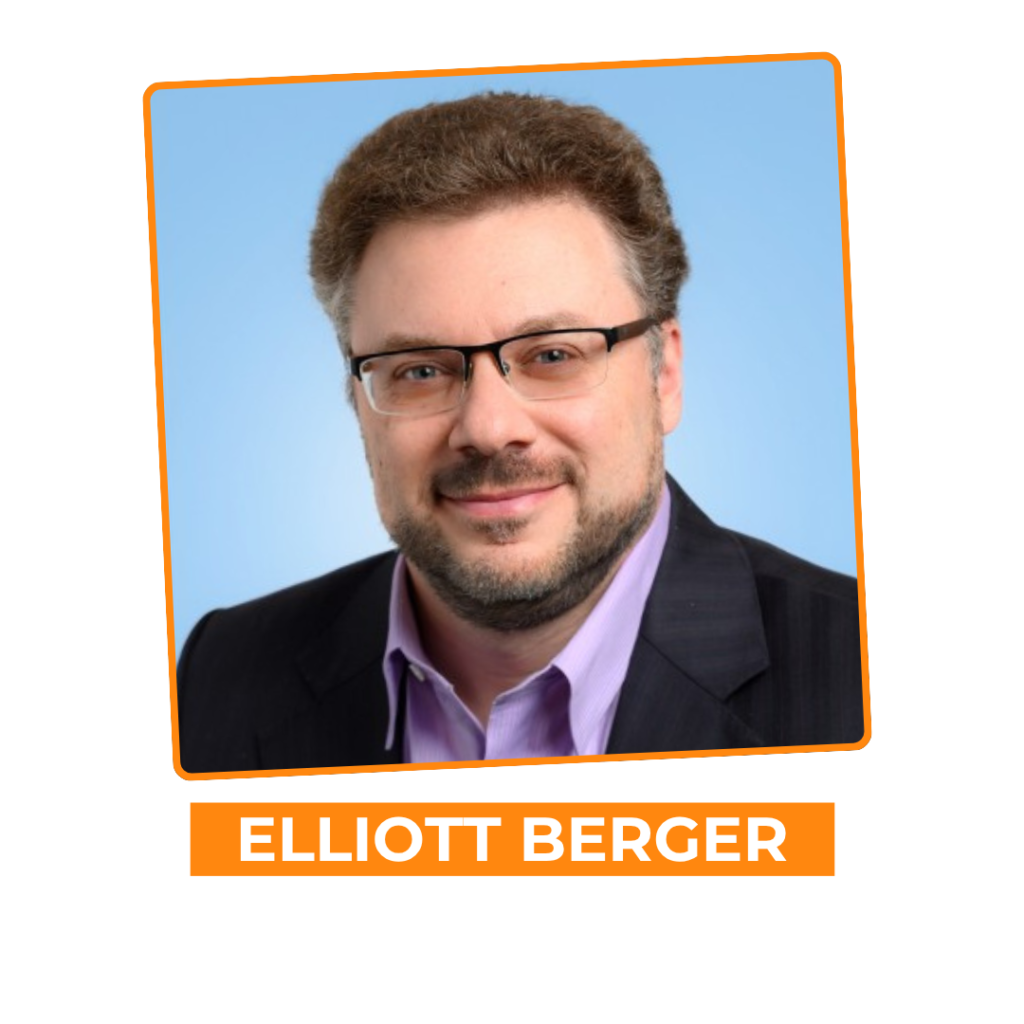
I sat down recently with Elliott Berger on the Active Ingredients podcast, where we explored this very problem. Elliott spent 14 years at Catalent, helping transform a private equity-backed business into a multi-billion-dollar public company. He now advises investors and senior executives across the CDMO, contract research organisation (CRO), and biotech space, with commercial diagnosis at the centre of much of that work.
What he has consistently found is that the problem is rarely where organisations assume. “An average system with good people,” Elliott told me, “is better than no system with awesome people or more people… several people in the system can do a lot more damage than 100 people randomly running around.”
The Solution
Step 1: Diagnose Before You Prescribe
Elliott’s starting point, whenever he works with a CDMO or pharma services organisation struggling with conversion, is a structured diagnostic. He examines the commercial machine from top to bottom and identifies where it is leaking before recommending any changes. The instinct to reach quickly for a solution, he argues, is exactly what turns a manageable problem into a costly one.
“Most of the time I come out, and they don’t have a full system,” he told me. “That’s like an engine… you have everything, but you forgot the intake.”
The intake, in commercial terms, is awareness. If your target customers do not know your organisation exists, or cannot clearly distinguish what you offer from your competitors, the rest of the machine is already working at a disadvantage. Elliott is specific about what it takes to fix this. “You have to know who you are, who the target customers are,” he said. “You need to have a priority on that.”
His recommendation is to start the diagnostic by working backwards from your annual revenue target. How many signed contracts do you need? How many late-stage opportunities does that require, and how many qualified leads must enter the top of the funnel each month to make it possible? Most CDMO commercial teams, when they run these numbers for the first time, find the top of their funnel is significantly underfed. In an industry where a purchasing decision can take years to mature and a missed window means waiting another three to five years for the next one, that shortfall is serious. “If you’re not working that system,” Elliott said plainly, “you’re going to be disappointed.”
Step 2: Trace the Leak Stage by Stage
Once the volume picture at the top of the funnel is understood, the diagnostic moves to conversion. Elliott looks at three specific interfaces where the commercial machine most commonly breaks down:
- between marketing and sales,
- between the sales team and the technical teams,
- at the point of close.
The marketing-to-sales handoff is where deals frequently stall. Elliott described a client whose commercial team had over 1,000 names in the work-in-process (WIP) stage of their pipeline. “I’m like, you’re insane,” he told me. “Either they’re not really being worked on, or [there are duplicates] in there, or you’re not progressing.” A bloated WIP stage almost always points to unclear qualification criteria, a broken handoff between teams, or a sales function stretched too thin to work the volume it has inherited from marketing.
RELATED: Learn From Leaders Who’ve Solved This
Struggling with transformation, team building or leading through change? Active Ingredients features life science executives sharing the exact frameworks they used to navigate these challenges. Real strategies from leaders who’ve made it work.
The second interface involves win rates, and here Elliott makes a point that may surprise many commercial leaders. A low win rate at the bottom of the funnel is “not always a sales problem,” he said. “You’re not going to sell anything [if] the science team or the operations team… is not [doing its job and is] not excellent.”
In the CDMO context, clients are not buying a service in the abstract. They are deciding whether to trust your scientists and your facility with a drug molecule that may represent years of development work. A prospective client walking your site should feel, from the moment they arrive, that every person they encounter is engaged and that the organisation is ready for their project. If that experience falls short, the sale is often already lost. In CDMO businesses, the deal is won or lost in the science room rather than the boardroom.
Elliott’s view on the marketing and sales relationship is equally instructive. Rather than treating friction between the two teams as dysfunction, he sees its absence as the more worrying sign.
“There’s some friction between sales and marketing,” he told me, recalling a conversation with a former leadership team, followed simply by: “Good.” Marketing drives long-term reputation and leads; sales drives near-term conversion. Those orientations are designed to pull in different directions, and the leaders job is to ensure that the tension stays productive rather than turning into infighting.
Step 3: Don’t Stop the Diagnostic at the Point of Close
Most commercial reviews end when a contract is signed. Elliott argues that this is precisely where many organisations miss one of the most significant leaks in the entire machine.
Onboarding is where CDMOs most commonly lose clients they have spent months or even years winning. A poor handoff from the commercial team to operations leaves a new client feeling that the organisation they agreed to work with is not the one now managing their project. “You have to have an amazing onboarding experience,” Elliott told me, “because that’s where you lose a lot… very quickly.”
Ongoing delivery communication matters equally once a project is underway. Clients in the CDMO sector understand that complex manufacturing and development processes do not always run to schedule. What they will not accept is silence when something goes wrong.
“If you’re communicating, you’re servicing, you’re discussing, you’re offering solutions,” Elliott said, “the customer is confident that they’re not being kept in the dark.”
In a sector built on repeat business, losing a client after onboarding is not a one-time revenue miss. It damages a relationship worth multiple contracts over many years.
The Evidence
Elliott applied this diagnostic framework across a commercial operation that eventually scaled into a multi-billion-dollar public company. The consistent finding, in that work and in the consulting engagements that followed, is that an end-to-end system outperforms a collection of strong individuals with no connecting architecture.
The sequencing matters too: “You can build a commercial machine on top of good factories,” Elliott said. “You cannot easily build good factories underneath a good commercial machine.”
When the machine is designed well and the diagnosis is applied honestly, the path from adequate to excellent becomes visible. As Elliott put it: “Being good or average is not good enough. You have to be excellent, because if you’re good, somebody who is excellent will eat your breakfast.”
Your Next Move
If your pipeline is active but your conversion rate is not where it needs to be, run the diagnostic before you change anything else. Ask:
- Working backwards from our revenue target, does the volume at the top of our funnel match what the business actually needs to win? If not, by how much?
- What does our work-in-process stage genuinely contain? If it is bloated, at which specific point is progression stalling?
- When a deal is lost, is it a sales problem, a science problem, or an operations problem? When did a senior leader last sit in on a technical qualification call or site visit?
- What does our onboarding experience look like from the client’s perspective? At what point in the post-sale process do we most commonly see new clients disengage?
Elliott Berger’s full conversation on Active Ingredients covers additional topics, including the leadership qualities that matter most in conditions of uncertainty, what makes CDMO commercial strategy so different from large pharma, and how AI is beginning to change what commercial teams need to know and do. Listen to the full episode.
Fraser Dove International identifies and places commercial leaders across the CDMO, CRO, and life sciences sector. If you are building your commercial leadership team, we would be glad to talk.
Thomas Dove, CEO
Thomas Dove is CEO and Co-Founder of Fraser Dove International. As host of the Active Ingredients podcast, Thomas interviews senior executives and industry pioneers to uncover the insights that drive successful life science organisations.
Through his work in executive search and the hosting the Active Ingredients podcast, Thomas has developed deep expertise in identifying the leadership qualities that distinguish exceptional life science executives. He regularly writes about talent acquisition strategies, leadership development, and the evolving challenges facing C-suite professionals in the rapidly changing life sciences.
Thomas is passionate about helping life science professionals navigate their career journeys and supporting organisations in building leadership teams that can drive innovation and growth. His insights stem from years of working closely with senior leaders across the pharmaceutical, biotechnology, and Medical Device industries.
Outside the office, he champions family values, positive energy, and his beloved Chelsea FC.

* This article is based on an interview from the Active Ingredients podcast. Hosted by Thomas Dove, the Active Ingredients Podcast dissects the very essence of exceptional leadership in the life sciences. Subscribe to the Active Ingredients podcast on Spotify, Apple Podcasts, Amazon Music and YouTube.
Loved this article?
Share it with your friends, family or your peers!
RELATED

Why Great Ops Leaders Fail The Innovator-to-CDMO Transition
Read post
Why You Can’t Hold a Team Accountable Without Empowering It
Read post
How to Lead as a Private Equity-Backed CEO When You Come From Big Pharma
Read post
How To Fix Career Development Conversations
Read post
Why Your CDMO Sales Model Is Losing You Customer Trust
Read post